

As an end-of-life doula, I have witnessed enough dying to know something about death and endings. This work has given me a perspective and a set of practices that can help us navigate this period of profound uncertainty about the state of the world and the future of human civilization. Like many others, I sense that we are experiencing forms of grief usually associated with loss and endings: grief for damaged ecosystems, sick and broken institutions, eroding trust, and futures that no longer seem assured. My work is to help people face the reality of death with honesty, compassion, and courage, and to open a space where grief can be spoken and held. From this vantage point, I reflect on our collective moment and how our grief itself may be preparing us for renewal.
Death doulas know the atmosphere that gathers when people sense what is happening but are afraid to speak it. They know the instinct to avoid a dying story. They know the fear and anxiety of staring death in the face and the desperate wish to be released from the suffering of a dying body. At the bedside, they support the dying person and their loved ones move through physical, sensory and memory loss, denial, anger, despair and waves of anticipatory grief. They see how hard it can be to understand that love is no longer about prolonging life and holding on to the past—it is about compassionate accompaniment and acceptance of its end.
Civilizations also move through endings. History reminds us that great civilizations rise and fall as they confront limits and stories that must change and give way to something new. I believe our civilization is at such a threshold. Many of the ideas, ideologies, thoughtforms, and the structures and institutions that hold them have become rigid and brittle and have lost their animating soul. They no longer serve Life on this planet.
I see signs of a failing social and economic system based on domination, consumption, and endless growth meeting the edge of its own limits. It is like a body riddled with cancer cells—cells once organized for the well-being of the whole begin to live as if their only purpose were endless multiplication. They consume and destroy the body that holds and sustains them. The common body grows weaker as life-destroying powers grow stronger.
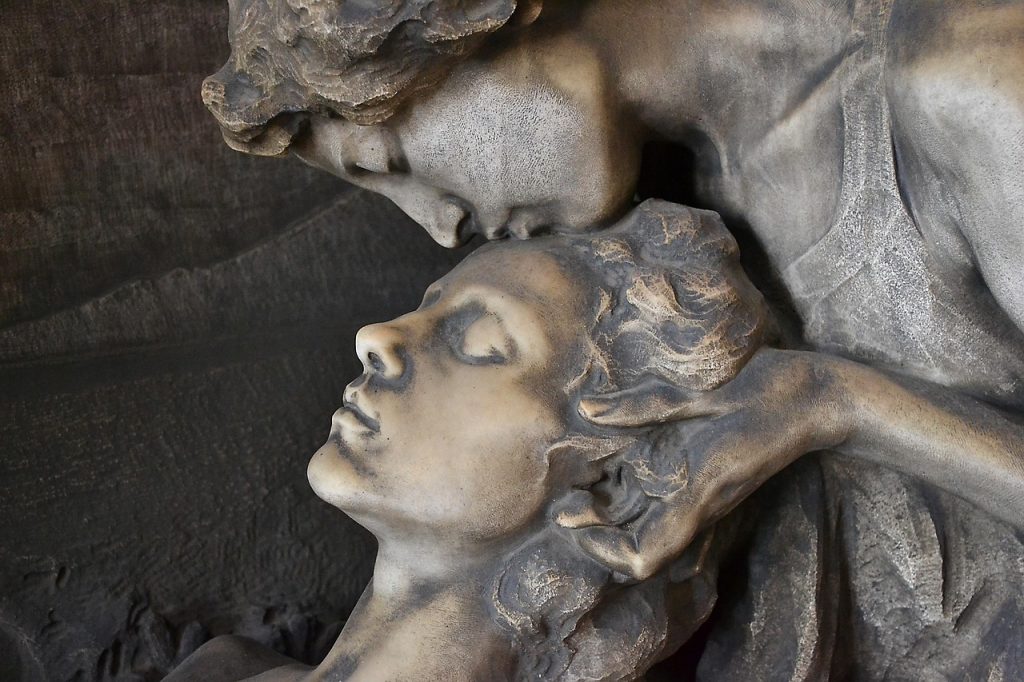
The dying and their loved ones often experience a prolonged period of anticipatory grief as the patient declines and loses one physical function after another. Death doulas make space for honoring and processing this grief throughout the dying process and afterward. In the news, on social media, in town meetings, and at family and social gatherings, I hear the same undercurrents of anticipatory grief that I see in my hospice patients. Our leaders cling to old identities as families cling to the face of the beloved before illness changed it. Beneath all the noise, grief gathers—unspoken, waiting for a people brave enough to embrace the sorrow and face the truth. This shared grief needs to be expressed, heard, and processed with others, whether in families, groups, or communities. As with individual deaths, communal expressions of grief are expressions of profound love for all that is being lost. There is a need, often overlooked in our culture, to recognize and give voice to this sorrow and to hold one another, individually and communally, in loving embrace.
The Life Review
Death doulas often engage their patients in some form of life review which involves looking back lovingly and honestly on one’s life without judgement. We encourage our patients to remember the goodness of their lives and the love they have shared. We explore meaning and purpose, accomplishments, things they wish they had done, important relationships, and the beliefs and values that they have come to hold. Often this work can bring up difficult memories and emotions over the regrets and hurts they have experienced from or imparted to others. These moments provide an opportunity to experience forgiveness and reconciliation within themselves and between their loved ones if they can open to it.
If grief is the emotional work of endings, life reviews are the work of meaning-making. People need more than comfort as life draws to a close. They need coherence. They need a story large enough to hold both gratitude and regret. Perhaps civilizations need this as well. This would be where the practice of life review becomes more than a bedside ritual. It becomes a way of asking what a civilization has loved, what it has harmed, what it must release, and what wisdom it can carry forward for the benefit of future generations.
How might we approach a civilizational life review in a communal way that would bring comfort, peace, and even moments of joy in the midst of our grief and loss?
A death doula comes to be a companion to people at the end of life. They come to listen and to sit vigil. We listen for what has not yet been said that needs to be said, and we try to help a person and the people who love them speak the truth with as much gentle honesty as they can bear. We remind those gathered that what is passing deserves tenderness, not because it must be preserved forever, but because dignity matters at the threshold, and because love, at its deep core, knows how to bow to life.
Perhaps this is one way we can begin a civilizational life review: by serving as spiritual midwives for one another and for humanity during these uncertain times. We can sit vigil together for a changing world by celebrating the beautiful achievements our civilization has produced, the horizons it has expanded, and the spirits it has uplifted over the centuries. At the same time, we must acknowledge the events and actions that have caused great harm and sorrow. As in an individual life review, to accompany a death honestly is to tell the truth in full. We do not serve what is emerging by denying what has been, and neither do we serve it by basking in nostalgia or shame. Civilizational grief asks something greater of us: reverence without illusion and without harsh judgment. As the psychologist Francis Weller has said, “we cannot grieve what we hold in judgement.”
The activist and scholar Joanna Macy has spoken about “The Great Turning” underway, which she describes as a global transformation away from systems based on endless economic growth, extraction, consumption, separatism, militarism, individualism, self-interest, and ecological damage toward a more life-sustaining, ecological, inclusive, interconnected, and socially just civilization. She sees this as a possible turning point in history rather than a total civilizational collapse. This would be a healthier lens, I think, through which to see a civilizational life review.

In the modern Western imagination, death is often seen as humiliation or cruel annihilation instead of as a teacher. We have lost touch with a sense of connection to the natural rhythms of life, death, and rebirth written into the fabric of Life. The leaf falls and becomes soil. The soil darkens and feeds the seed. The seed splits open in the dark and climbs toward the light. Winter strips the branch bare so Spring can reveal what was being prepared in silence. Tides recede and return. Moons wax and wane. Again and again, the living world entrusts itself to this ancient pattern: dissolution, gestation, and renewal. What appears to vanish is often being changed in form and carried into another expression of life. The great wisdom of the earth is that nothing vital is born without some surrender, and nothing truly surrendered is lost from the holy cycle that makes life possible. Modern industrial civilization has lost touch with this wisdom.
Thresholds are rarely neat. Death doulas know that the self does not surrender gracefully, and they know the panic that comes with approaching death. There comes a moment when the old life cannot continue and the new life has not yet fully emerged. The body trembles. Breath becomes an ocean. Time loses its edges. Those present are asked to stay near, remain steady, and trust processes they cannot control. I believe we are living in such a time now. The contractions of history are upon us, and many mistake them for the end of meaning when they may be the labor of another way of being pressing, with intense longing, toward the light.
The Holy Work of Grief
Grief, if we let it do its holy work, is not only a lament for what is leaving, it is also a doorway of anticipatory joy for the new life ahead. In death doula work, I have seen how mourning softens the grip of fear, how tears clear a space in the room, how naming what has been lost makes people more available to what is still here. I have experienced the warmth of a gentle hand, the quiet between breaths, the unexpected grace of one more moment of connection. If we consent to grieve the world that is passing—its broken promises, its exhausted myths, the structures that once made us feel secure–we may discover that grief is not a wall but a threshold. It loosens our attachment to what was never truly life-giving and makes us more open to what is arriving: deeper belonging, truer kinship, humbler ways of living, forms of courage shaped not by conquest but care. The future does not ask us to turn away from sorrow. It asks us to enter it so fully that our eyes become capable of recognizing new life when it appears.
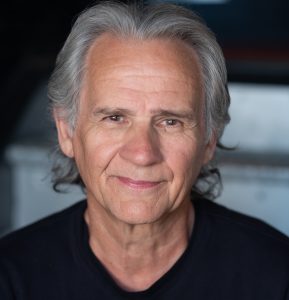
Francis Weller views grief not as a pathology to be cured, but as a communal necessity. He argues that Western culture isolates sorrow, forcing us to carry heavy, shared burdens alone. His work on collective grief is highly relevant, I believe, to our soul needs today. He emphasizes that much of our sorrow isn’t just personal, but belongs to the world and that communal grief “restores the vital Village Mind, allowing us to express and release shared sorrows through storytelling, song, and ritual. In communal spaces, grief creates belonging and empathy, helping us to transcend our differences.”
Civilizational Rebirth
If a new civilization is being born, it will not appear quickly or triumphantly. More likely, it will begin in the disciplines every death doula learns at the threshold: reverence for what is vulnerable, honesty about what is ending, patience with uncertainty, tenderness toward fear, respect for the body and its limits, and fidelity to presence when no cure is possible. It may begin in learning again how to belong to place, how to listen across differences, how to shelter the fragile, how to measure wealth by relationship rather than extraction, how to welcome mystery without trying to dominate it.
Perhaps the world to come will not be born through conquest, but through accompaniment. Perhaps what is needed now are people who can remain near what is breaking without fleeing, who can bless what is ending, protect what is tender, seek what unites rather than divides, and birth forms of life rooted in mutuality, humility, and interdependence. I see this task as spiritual midwifery for the birth of an emerging civilization.
What can we do to collectively hold this liminal period between death and rebirth? Elizabeth Padilla, Director of The Conscious Dying Collective, has one answer: “Perhaps the most important thing we can do is stay connected. Fear isolates us, but community strengthens us. When we talk honestly, care for one another, and take practical steps together, we build resilience.” She reminds us that “the future is not yet written. Hope lives in our willingness to act, adapt, and protect what we love. Even in the toughest times, we can still choose courage, compassion, and collective care. Hope does not mean ignoring reality. Hope means choosing to believe that what we do matters.”
We may hold this threshold space by recognizing and affirming that, even amid the unraveling, the seeds of a more life-giving world are already taking root among us. They appear wherever people remember that no life is separate; wherever bread is shared, wounds are tended, water and land are protected, grief is welcomed, and the vulnerable are not abandoned. They appear in acts of mutual aid, in emerging economies of cooperation rather than extraction, and in communities that choose presence, generosity, and reverence over fear.
Many groups are now engaged in shaping a more life-giving culture and developing strategies for giving it birth. These include mutual aid and local cooperation networks in which neighbors feed neighbors, care for the elderly, exchange skills, cultivate community gardens, and build economies of reuse rather than endless consumption. They include regenerative ecological practices that heal soil, water, and habitat while teaching respect for Indigenous wisdom rooted in reciprocity with the earth and kinship with all life. They include restorative and participatory forms of governance that foster global citizenship and shared responsibility to address poverty, inequality, human rights, peace, and sustainable development. There are also a plethora of emerging spiritual, contemplative, and healing practices that honor vulnerability, interdependence, and accompaniment, helping people recover the capacity to be present, grieve, reconnect with what is life-giving, and protect one another across difference—not because we are the same, but because we belong to one shared living universe.
These gestures may seem small beside the vast machinery of domination that governs our world today. However, it is important that we see them as precious seeds to be nurtured and tended to. They are seeds that carry a different pattern of being—another wisdom that we all hold deep within our human hearts—a knowing that we all belong to one another and are braided to this beautiful earth in which we live and move and have our being. Perhaps the new world is already arriving wherever we learn again to live as though everything were sacred and nothing living can be left outside the circle of our care.
And for all that is ending, let us meet it as the best death doulas do: with clear eyes, undefended hearts, and hands willing to serve what cannot be possessed. Let us refuse the seductions of separatism and domination. Let us learn the ancient, future-making art of staying present when one world is dying and another is drawing its first unseen breath. There are moments when history itself becomes a bedside, and all that finally matters is whether we can love enough to tell the truth, bless enough to release what must go, grieve enough to make room for what is coming, and trust enough to remain open to the mystery as it takes form. Perhaps that is how civilizations die with dignity. Perhaps that is how new ones are born worthy of our devotion




Comments (0)