
A New Ancestral Migration
A Choctaw author reframes migration through Indigenous wisdom, revealing how humanity's deepest journeys can lead from exile and loss to renewal and a shared positive future.

A Choctaw author reframes migration through Indigenous wisdom, revealing how humanity's deepest journeys can lead from exile and loss to renewal and a shared positive future.
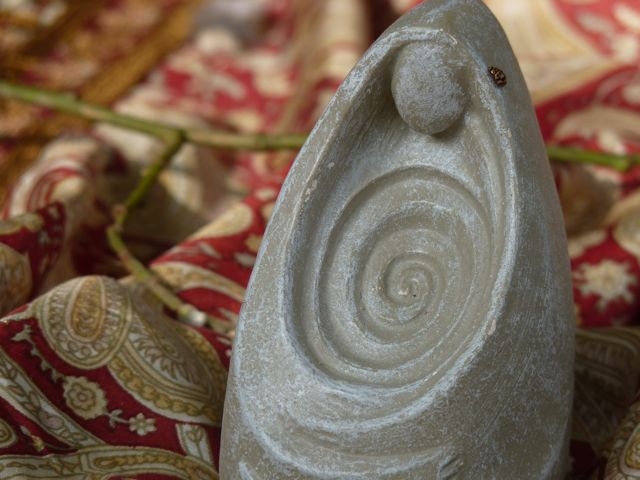
Our first article (Kosmos, Spring / Summer 2012) gave an overview of the new human capacity we are starting to articulate—that we call Collective Presencing, the purpose of which is to allow us to systematically achieve collective wisdom. We described the two distinct phases that we see unfolding as a collection of individuals learns to become a collective capable of employing this capacity on behalf of the whole: firstly, becoming a circle of presence, then becoming a circle of creation.

In this contemplative reflection, Llewellyn Vaughan-Lee questions whether artificial intelligence can genuinely support spiritual growth. Contrasting AI’s reliance on accumulated past data with the timeless awareness of the awakened heart, he argues that real transformation arises from inner stillness, love, and reconnection with Earth—not technological acceleration.

The fears around AI are real. But it's not AI that we have to necessarily fear - it's us.

Svetomir Karovski explores AI not as a threat but as a potential catalyst for humanity’s spiritual evolution. Drawing on mystical experiences in the Andes and rural life in Serbia, he frames AI as a mirror of human consciousness—capable of amplifying greed or guiding us toward love, coherence, and divinity.

This essay recalls the roots of ecological politics in Indigenous traditions, contrasts them with Western thought, and links them to the modern environmental movement. Recalling ancestral wisdom and women’s knowledge, it envisions a revolution of love, wisdom, and compassion—recovering what was lost to guide humanity toward a more harmonious, life-serving future.

This deeply embodied essay invites readers to shift from a human-centered, extractive model of intelligence toward a wide-boundary, relational understanding rooted in entanglement. By engaging AI, collapse, and the wisdom of rocks through a posthuman lens, it calls us to metabolize modernity’s delusions and participate in a shared, emergent intelligence—one that listens, learns, and co-creates with all of life.

Drawing from physics, music, and sacred practice, the piece invites readers to perceive mind and universe as intertwined in a grand symphony of coherence.

Launched in 2001 as a wild experiment in crowdsourcing, Wikipedia has become the most expansive, accurate, and resilient encyclopedia in history. This essay reflects on the unlikely success of this self-organizing, volunteer-driven project and what it reveals about intelligence, collaboration, and the deeper evolutionary potential of freely shared knowledge in a connected world.
