Skip to content

Archives: Contributors

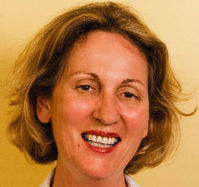
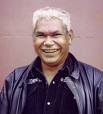
Terry Tempest Williams

Naturalist, Writer, Environmental Activist 

“The eyes of the future are looking back at us and they are praying for us to see beyond our own time.” 

The Ecology Hall of Fame, adding Terry Tempest Williams to its
honorees, noted that she “combines all the major strains of
environmental passion.” Her life has focused on opposing resource
destruction, especially that affecting human health; a love for the
desert, and other naturally beautiful places; and land stewardship over
many generations, which ties her to the region where she was born and
still living. 

Williams is a Utah native, descended from five or six generations of
Mormon pioneers. “I write through my biases of gender, geography, and
culture,” she says. “I am a woman whose ideas have been shaped by the
Great Basin and Colorado Plateau.” 

Williams is perhaps best known for her book Refuge: An Unnatural
History of Family and Place
(Pantheon, 1991), in which she chronicles
the epic rise of Great Salt Lake and the flooding of the Bear River
Migratory Bird Refuge in 1983, alongside her mother’s diagnosis with
ovarian cancer, believed to be caused by radioactive fallout from the
nuclear tests in the Nevada desert in the 1950s and 60s. Refuge is now
regarded as a classic in American nature writing, a testament to loss
and the earth’s healing grace. 

Williams’ other books include Red: Patience and Passion in the
Desert
, 2001, a collection of essays, An Unspoken Hunger (Pantheon,
1994); Desert Quartet: An Erotic Landscape (Pantheon, 1995); Coyote’s
Canyon
(Gibbs M. Smith, 1989); and Pieces of White Shell: A Journey to
Navajoland
(Charles Scribner’s Sons, 1984). She is also the author of
two children’s books: The Secret Language of Snow (Sierra Club/Pantheon,
1984); and Between Cattails (Little Brown, 1985). 

In 2004 Terry Tempest Williams published The Open Space of Democracy,
in which she tries to define how we can break down the partisanship and
polarization in our society so that we can come together to solve the
political and environmental problems which threaten our democracy and
our land. In it she says, “I do not think we can look for leadership
beyond ourselves. I do not think we can wait for someone or something to
save us from our global predicaments and obligations. I need to look in
the mirror and ask this of myself: If I am committed to seeing the
direction of our country change, how must I change myself?”
Read More

Tex Skuthorpe

Tex Skuthorpe, an Aboriginal artist from Goodooga
north western NSW, was privileged to be taught his people’s traditional
culture by the Noonghaburra elders from Noonghal country. Being the
eldest boy of the Emu and Sand Goanna totems gave Tex the responsibility
to teach and record Noonghaburra law. 

Traditionally, all recording was in art form and law was communicated
to young people through initiation, dance, stories and art. As such,
all Tex’s artwork incorporates a story – some are traditional stories
and others, such as his environment work, tell the story of more
contemporary issues. 

The diversity of Aboriginal art reflects the diversity of the
Australian landscape. Tex’s designs are unique to Noonghal country, his
traditional land. Before Tex could paint Noonghaburra stories, the
elders told him to find his designs in the bush. The circular design,
which is such a strong feature of many of his paintings, was found only
after months of searching. This pattern was revealed to Tex after
cutting a small piece of bark from a Coolabah tree, and leaving it to
dry. He found the circular tracks of a small insect, which helps to
clean the tree. 

Before Tex could use the insect’s design, he was required to show
respect, by understanding its entire lifecycle – how it lived, what it
needed for survival, its relationship to other people’s totems and how
and why it made the design on the tree. Tex was taught that the
depiction of any animal or plant required this level of intense study. 

This whole process of truly experiential learning created in Tex an
intimate, holistic and highly practical understanding of his country and
his place within it as well as a deep sense of responsibility to use
the knowledge with wisdom and respect.

NAIDOC national aboriginal artist of the year 1990/91 

The combination of aesthetics and meaning in Tex’s art was one of the
major contributors to his winning this prestigious award. The award was
a National Award, with votes coming from judging panels of Aboriginal
artists and experts in every State and Territory (including Northern
Territory and Western Australia).

International recognition 

In 1994 Tex presented a piece of work – “Tomodachi” (meaning
“Friend”) – to the Emperor of Japan, which is now in his private
collection and destined to become part of the National Treasure of
Japan. Tex was given the Emperor’s approval to use his private seal in
any artwork – an honour previously only given to the most highly
acclaimed artists within Japan. 

As a result of this privilege, Tex was commissioned to paint a series
of artworks for an exhibition in Sydney by two Japanese Incubana
Masters. These stunning paintings combine traditional stories from Japan
and Noonghal country and are painted on Japanese rice paper and mounted
on traditional silk scrolls measuring 1 metre x 2.5 metres.

Read More

William E. Marks

William E. Marks, water philosopher – raised on an organic farm.

As a student at Fairleigh Dickinson University (FDU) – researched
fish kills and industrial pollution and had major industry indicted by a
Federal Grand Jury. He was subsequently honored by the United States
Environmental Protection Agency with the “Citizen Activist Of The Year”
award. After college he worked as Senior Environmental Analyst for the
City of Newark to develop programs for storm water runoff and public
water supply.

After Newark he undertook a coast-to-coast horseback odyssey across
America entitled, “Ride for Nature” – to help raise water consciousness.
The 20-month trek used a lead horse and packhorse; passed through 25
states, and traversed over 7,000 miles while living outside full time.
    
Founder/President (14 years) of Martha’s Vineyard’s first
State-Certified water testing laboratory, and Founder/President (15
years) of Vineyard Environmental Research, Inst. (VERI), where he
researched acid rain and groundwater mobilization of metals with grants
from USEPA; American Water Works Association (AWWA); New England Water
Works Association (NEWWA), and performed sea level research with
scientists from Woods Hole Oceanographic Institute.
 
Served as Chair of the Greenlands Committee, which saved 400 acres from
dense development over Martha’s Vineyard’s only aquifer. He authored of
the town of West Tisbury’s first Open Space Plan and the Open Space Plan
for the town of Edgartown, for protection of fragile ecosystems,
wetlands, vistas, and endangered species; in the early 1980s he
undertook a study of all of the island’s underground fuel tanks and
authored by-laws.
     
Mr. Marks is the only official from Martha’s Vineyard elected to the
Board of the Massachusetts Association of Conservation Commissions
(MACC), for the protection of wetlands in over 300 communities
statewide. He received the community “Groundwater Guardian Award” from
the international Groundwater Foundation, which was presented by Gilbert
M. Grosvenor, Chairman of the Board of National Geographic Society; is
recipient of the “Water Hero Award” from the World Water Rescue
Foundation, and is an international water advisor to the Board of the
Women International Coalition Organization (WICO) based in the UK. 

Mr. Marks founded and published Martha’s Vineyard Magazine and Nantucket Magazine for 6 years. Both magazines had an environmental emphasis. He is author of the History of Wind Power on Martha’s Vineyard, and The Holy Order of Water, Healing Earth’s Waters and Ourselves,
a philosophical, spiritual, healing book – and writes water articles
and poetry for various publications, including 5 articles for The Encyclopedia of Water published by John Wiley & Sons. Editor/Publisher of Water Voices from Around The World, a book that won the Independent Publishers Gold Award as the book, “Most Likely to Save the Planet.” 
           
He continues to conduct water research, travel, perform Native American
flute, and speak around the world. He has researched water in 15
countries and is currently involved with 3 documentaries for television,
DVD, and theatrical release in 2008.

William E. Marks
Water Voices from Around The World


“Most Likely to Save the Planet”


5 Pleasant Ave.


Martha’s Vineyard, MA 02539


www.watervoices.com

Read More

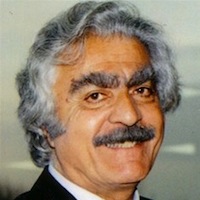
Abdul Aziz Said

Abdul Aziz Said is the senior ranking professor at American University and the first occupant of the endowed Mohammed Said Farsi Chair of Islamic Peace. He founded the American University Center for Global Peace which undertakes a wide range of activities domestically and internationally aimed at advancing our understanding of world peace. He is the founding director of the International Peace and Conflict Resolution Division, in the School of International Service at American University. 

Professor Said is a frequent lecturer and participant in national and international peace conferences and dialogues and is deeply involved with a number of professional associations and Service Academies. His past and current public service includes consulting the U.S. Department of State, the Department of Defense, the United Nations and the White House Committee on the Islamic World.  He advises and serves on the Board of Directors for various international non-governmental organizations including Search for Common Ground, Global Education Associates, the National Peace Foundation, PAX International, International Youth Advocate Program, The Omega Institute, Nonviolence International, the International Center for Religion and Diplomacy, and the Jones International University-University of the Web. He also serves on the editorial boards of Human Rights Quarterly and Peace Review. He served as advisor to the Democratic Principles Working Group of the United States Department of State’s “Future of Iraq Project” in 2002-2003 and was an advisor to the members of the Iraqi Governing Council.

Professor Said has authored, co-authored, co-edited and edited more than seventeen books, including: Islam and Peacemaking in the Middle East (Lynne Rienner Publishers, November 2008), Contemporary Islam: Dynamic, not Static, Peace (Routledge Publishers, August 2006) and Conflict Resolution in Islam: Precept and Practice (University Press of America, 2001), Cultural Diversity and Islam (University Press of America, 2003), Concepts of International Politics in Global Perspective (Prentice Hall: 1963, 1970, 1979, and 1995), Human Rights and World Order (Transaction Books/Praeger, 1978), Ethnicity in an International Context (Transaction Books, 1976), The New Sovereigns: Multinational Corporations as World Powers (Prentice-Hall, 1971), Theory of International Relations: The Crisis of Relevance (Prentice-Hall, 1968), Ethnicity and U.S. Foreign Policy (Praeger: 1977 and 1980) and articles on various aspects of world politics.Abdul Aziz Said, professor at American University, Mohammed Said Farsi Chair of Islamic Peace, and founder of American University Center for Global Peace. A consultant to the US Department of State, the Department of Defense, the United Nations and the White House Committee on the Islamic World, he has authored over seventeen books, including: Islam and Peacemaking in the Middle East (Lynne Rienner Publishers, November 2008). 

Read More

Bert Parlee

Bert Parlee, PhD serves as senior advisor at STAGEN in Dallas, complementing a private practice as Executive Coach, Leadership Trainer, OD Consultant and Mediator.  His areas of expertise are training individuals, teams and organizations on how to bridge opposing perspectives, principles and worldviews, and thus to communicate more effectively in situations of difference, disagreement and conflict.  A partial list of clients includes IBM, Chevron, Microsoft, Pearson Publications, Province of British Columbia, The California Endowment, Fujitsu, IMC2, Aspire HR and Hicks Muse.

The STAGEN work focuses primarily on helping mid-market companies scale toward enterprise-level operations, as well as serving the Young Presidents Organization with coaching, training and facilitation.

Bert has delivered trainings on Leadership, Communication Skills, Change Management and Integral theory and methodology in Canada, England, Germany, Russia and Brazil. 

Bert maintains a private personal life and executive coaching practice, as well as a psychotherapy practice, serving individuals, couples and families.

In the non-profit world, while studying for his doctorate in San Francisco, Bert directed a residential adolescent facility in Oakland’s “murder corridor” for 7 years.  He now serves as a consultant for the California Endowment as well as a consortium of non-profit community leaders in the Los Angeles area on how to help struggling communities to thrive amidst great challenge.

Bert has been involved as a founding member with the Integral movement from it’s inception, initially serving as leader of the Psychotherapy branch, then serving as Ken Wilber’s Chief of Staff for 5 years during which he led I-I weeklong trainings on Leadership, Integral Life Practice, Ecology and Sustainability and Psychotherapy. 

Bert received his B.A. in International Relations from the University of New Brunswick, his M.A. from Naropa University in Contemplative Psychotherapy, and his doctorate in Clinical Psychology from the California Institute of Integral Studies.  He spent 2 years traveling in Asia in the late 1970’s where he studied with several spiritual traditions in various monasteries and ashrams, from which he has gone on to teach meditation, contemplative practice and how these wisdom traditions can be effectively translated for western audiences.

www.integralcoach.com  
www.stagen.com

Read More

Coming Soon

The Village Way

Practices for Belonging in a Fragmented World

For thousands of years, we lived according to the principles of village life. Then, around the 14th Century, our lives were reorganized by rulers around growth and accumulation – often at the cost of community, equity, and the living Earth. What would it mean to return to simplicity, and mutual care?

Join us for a 9-month inquiry into this question, exploring how we participate together in a time that calls us back to community, resilience, and shared life,

Join the Circle

watercolor of diverse group of people

Kosmos accepts no advertising or sponsored content. Everything is offered freely. We rely completely on the support of our Readers.

Trending Articles

Back To Top